
Why embroidery is the only thing that survives a business
Print fades, ink cracks, vinyl peels. Embroidery is the thing your customer sees five years later, on a hat their cousin still wears. Here is why we keep insisting on it.
Most "merch" today is built to be cheap and forgotten. A printed tee from a bulk site lasts a season. The next wash takes the logo with it, and the customer who paid you good money to be a walking billboard turns into someone wearing a faded blob.
That's not branding. That's litter with your name on it.
Embroidery is the opposite move. Real thread, stitched into real fabric, by a machine that costs more than a car and an operator who has been doing it long enough to know when the bobbin is about to misbehave. The result is a logo that survives the first wash, the second wash, and the fifth winter — because the design isn't sitting on top of the shirt, it's woven through it.
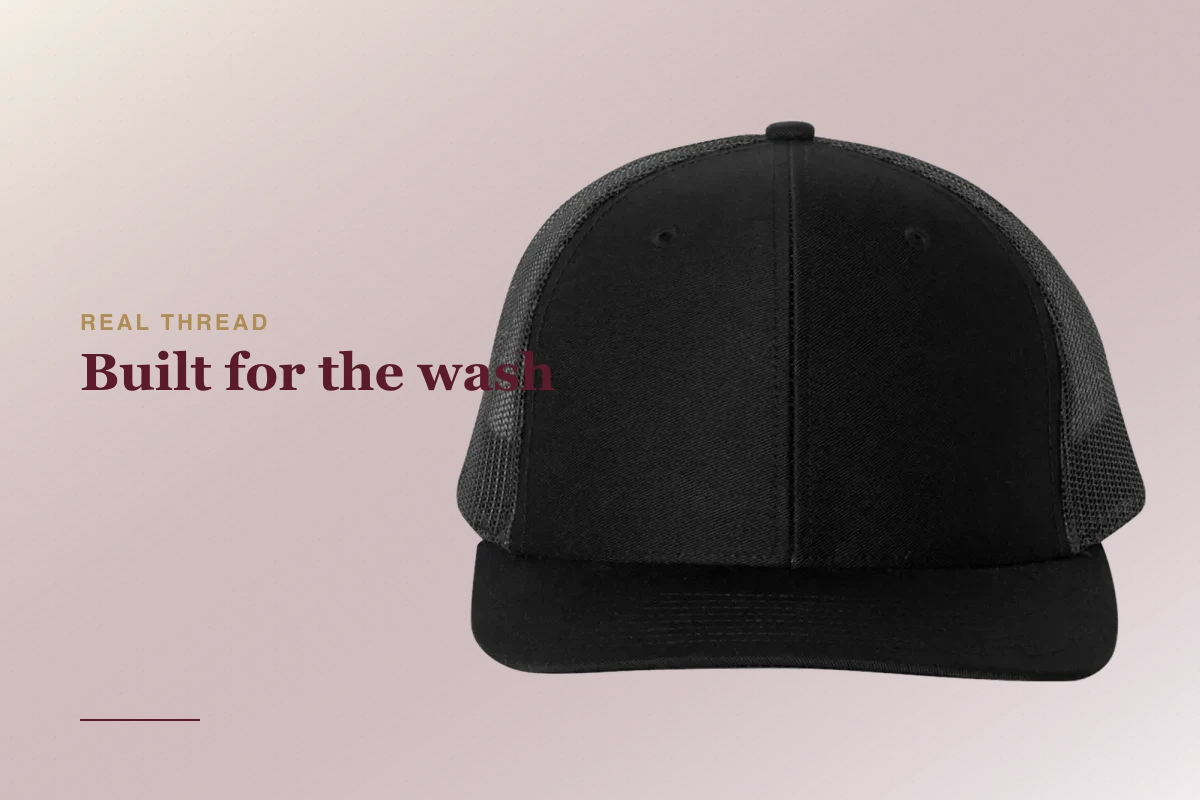
What you are actually buying
When you order an embroidered hat or polo, the quote line says one thing — but you're paying for four:
- Digitizing. Your logo, translated into stitch paths. This is the step nobody sees and the step that decides whether the finished product looks like a logo or like a smudge. We do it before we touch the machine, and we save the file so re-runs match.
- Thread, not ink. Polyester or rayon thread, color-matched to your brand, in a real palette — not the four-color compromise a printer gives you because their press only takes four screens.
- The blank. A hat or shirt that wasn't picked because it was the cheapest. We pull from Richardson, Carhartt, Port Authority — the ones that hold their shape after the warehouse, the truck, and the wash.
- The work. A person watching the run, catching tension issues, calling the customer when the logo needs a tweak before we commit 12,000 stitches to it.
That stack is what makes the difference between a shirt your team is proud to wear and a shirt that ends up in a paint bucket.
Why "cheap" merch is the most expensive merch
Run the math. A printed tee from a discount site costs you $7. It lasts three months of regular wear before the print starts to crack. You hand out 50, get six months of brand visibility, and 80% of them are in a drawer or a rag pile by month nine.
A well-embroidered polo from a real shop costs you $40. Your manager wears it three times a week for two years before it retires. That's roughly 300 days of brand visibility — and the kind that says we picked this on purpose, not we got the cheapest option on the corporate Amazon account.
The cost per impression on the second one is lower. The signal it sends is higher. That's the trade we're making every time we say no to print and yes to needle.
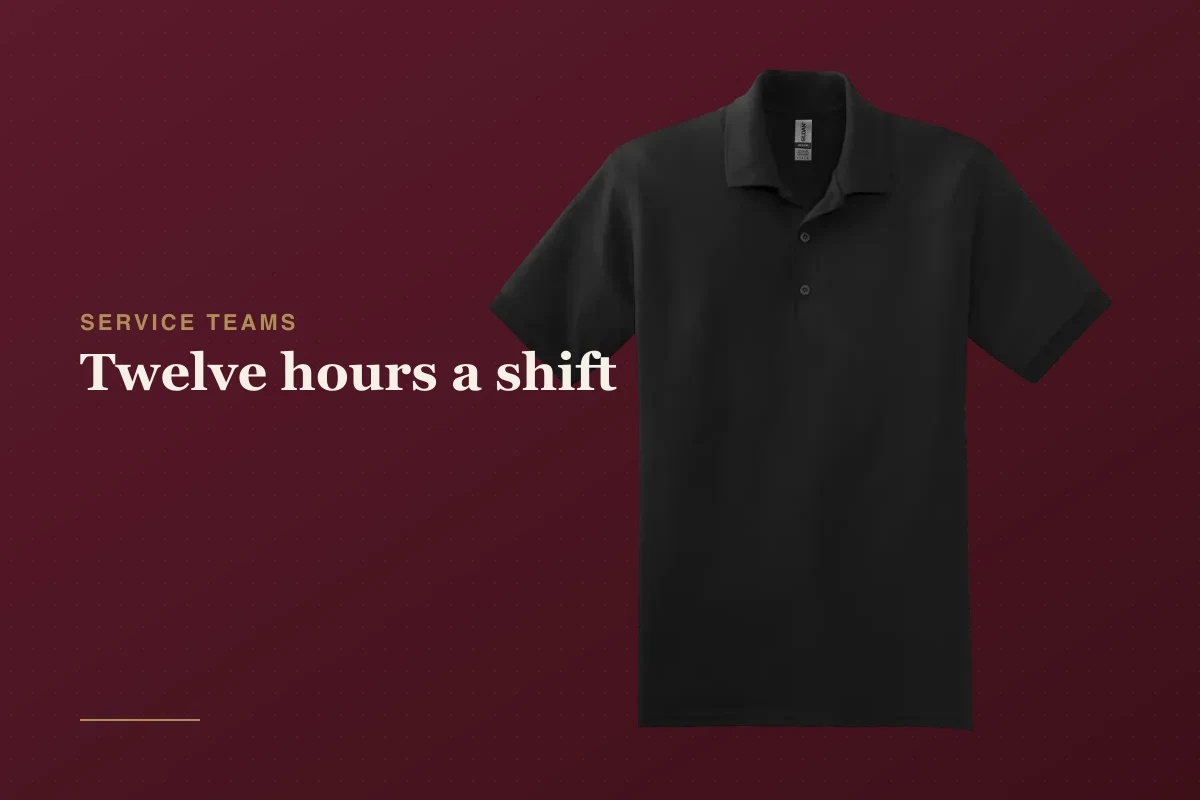
The customers who keep coming back
Construction crews who put their company logo on a hat, hand them out on the first day, and watch the same hat show up on a new hire's head three years later because someone passed it down. That's a brand surviving turnover.
Restaurants whose front-of-house staff wear the polo for a 12-hour shift, six nights a week. The shirt that fades in the first month is a cost. The shirt that still looks sharp on month nine is a saving.
Foundations and youth teams that hand out gear at fundraisers. The embroidered jacket sits in a kid's closet for a decade. Every time they put it on, a piece of your mission walks down the street with them.
The print options exist for the moments where they make sense — a one-off event, a flash drop, a low-budget tee for a 5K. We do those too. But the brand gets built on the embroidered piece, because that's the one that doesn't disappear.
What we ask of you
Bring the logo. Bring the count. Bring the use case — who's wearing it, where, how often. We come back with the right blank, a digitized preview, a price that includes the digitizing fee (no surprise add-ons after the fact), and a turnaround we can actually hit.
If you're new to this and don't know where to start: walk through the find-your-hat quiz. It asks the same questions we'd ask in a phone call, and at the end you'll see the three or four blanks we'd actually recommend for your team.
Or just email thevalleyembroidery@gmail.com. Real people, Lompoc time zone.
The thing about embroidery is — once you do it right, you stop thinking about merch. The shirts last. The hats last. The brand walks around on your team's heads and shoulders, and you spend your time doing the actual work instead of replacing your fade-stained polos every quarter.
That's the trade. We think it's the right one.
Featured products
Customize one of these
The blanks we reach for in this piece. Drop your logo on one and see a live mockup, no account needed.

Clients featured in this story
Real Central Coast work behind the advice above: see how each job came together.
 Trades
Carhartt jacket & cap
C.R. Mobile Repair
Carhartt jackets and matching caps for the crew.
Read the story → Trades
Branded polos
Valley Auto Glass
Polos the owners actually wear to work.
Read the story → Teams
TeamsHorse coolers & gear
Area VI Adult Riders
Stitched horse coolers and rider gear.
Read the story →Talk to a real person. We're right here in Lompoc.
Send a logo and a count, and we'll come back with pricing, recommended blanks, and a real stitched proof before you pay a cent.